780LE Hiten Steel Plates
HITEN 780LE PLATE: High-Tensile Steel for Demanding Structural and Heavy-Engineering Applications
HITEN 780LE PLATE is a high-strength, high-toughness steel plate designed for applications where engineers need a combination of elevated yield strength, tensile strength, weldability, and low-temperature impact performance. The designation is associated with the JFE-HITEN high-strength steel plate range, with the 780LE grade positioned in the high-toughness series.
For industrial buyers, the important question is not simply whether the plate is "780 MPa steel." Procurement must establish the exact grade designation, thickness, supply condition, mechanical requirements, impact-test requirements, dimensional requirements, and documentation before placing an order. This is particularly important when sourcing material for bridges, heavy machinery, offshore structures, storage equipment, gates, penstocks, and other engineered structures where strength-to-weight ratio and structural reliability are important.
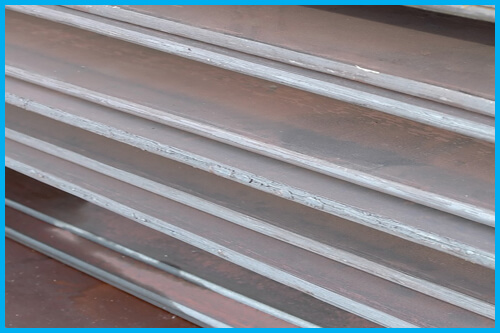
Understanding HITEN 780LE PLATE
HITEN 780LE belongs to the high-strength steel plate family developed for demanding structural and industrial applications. The "780" designation corresponds to its nominal strength class, while the "LE" series is associated with enhanced toughness at low temperatures.
JFE Steel identifies JFE-HITEN 780LE as part of its LE high-toughness series and states that the grade is produced using controlled rolling and minimum micro-alloying technologies. The manufacturer's published data also identifies either controlled thermomechanical processing or quenching and tempering as applicable production routes depending on the required product condition.
The principal attraction for an engineering buyer is the combination of approximately 685 MPa minimum yield strength for applicable thickness ranges and 780–930 MPa tensile strength, together with a specified Charpy impact requirement at -40°C. Thickness-dependent requirements apply, so the purchase specification should always be checked against the actual ordered thickness rather than relying on a generic grade description.
This distinction matters commercially. A buyer ordering 780LE plate should request the manufacturer's applicable technical specification and ensure that the quoted material corresponds to the required thickness, processing route, testing requirements, and certification.
Material Characteristics That Matter to Buyers
The defining characteristic of HITEN 780LE PLATE is its combination of high strength and low-temperature toughness. JFE's published data specifies a minimum yield strength of 685 MPa for the relevant lower thickness ranges, with the minimum yield requirement reducing to 665 MPa for thicknesses above the specified threshold. Tensile strength is listed at 780–930 MPa, while Charpy impact testing is specified at -40°C with a minimum absorbed energy of 40 J.
The grade is also developed with weldability in mind. JFE reports that the controlled rolling and micro-alloying approach provides good weldability and high toughness in low-temperature regions. Its published welding information further reports favorable results in y-groove weld cracking testing, including no low-temperature cracking at a 25°C preheat condition in the cited test. Actual welding procedures, however, must be established by the fabricator based on thickness, joint design, welding process, consumables, restraint, heat input, and applicable project requirements.
For procurement teams, this means that strength alone should not determine material selection. The complete specification—including toughness, fabrication requirements, thickness and delivery condition—needs to be considered.
Available Product Forms and Specifications
HITEN 780LE is primarily supplied as steel plate for structural and industrial fabrication. The manufacturer's published grade table covers thicknesses beginning at 6 mm and extending to 203.2 mm, with different carbon-equivalent limits and yield-strength requirements applying according to thickness.
| Parameter | JFE-HITEN 780LE |
|---|---|
| Product form | Steel plate |
| Applicable thickness | 6 mm to 203.2 mm in the published grade table |
| Yield strength | ≥685 MPa for applicable lower thickness ranges; ≥665 MPa for specified heavier thickness |
| Tensile strength | 780–930 MPa |
| Charpy impact test | -40°C |
| Minimum absorbed energy | 40 J |
| Production condition | QT or TMCP, depending on specification |
| Series | LE high-toughness series |
These values should be treated as specification-level information rather than a substitute for the material certificate. Thickness-specific requirements and the purchaser's order specification remain decisive.
A commercial enquiry should therefore specify the required thickness, width, length, quantity, delivery condition, testing requirements, and documentation rather than simply requesting "780LE plate."
Applicable Standards and Grade Identification
One of the most important sourcing considerations is correct grade identification.
HITEN 780LE is a JFE-HITEN designation, not a generic name that should automatically be treated as identical to every 780 MPa-class steel in another international standard. JFE publishes the grade within its own HITEN product series.
This distinction is particularly important when a project specification references JIS, ASTM, EN, or another national or international standard. A buyer should not assume that a different 780 MPa structural grade is automatically equivalent to JFE-HITEN 780LE simply because its yield or tensile strength appears similar.
Likewise, HITEN 780LE should not automatically be quoted as ASTM A514, EN S690QL, or another high-strength structural grade without technical confirmation. Similar strength levels do not establish material equivalence. Chemical composition, toughness, heat treatment, welding characteristics, dimensional tolerances, certification requirements, and other specification conditions can differ.
Where an equivalent or alternative grade is requested, the engineering team should obtain written technical confirmation from the manufacturer or qualified material specialist before substitution.
Industrial Applications of HITEN 780LE PLATE
The grade is suited to structures and equipment where high strength and low-temperature toughness are important. Published application information for Hiten 780le Plate Stockists In India includes bridges, oil tanks, spherical holders, offshore structures, gates, penstocks, civil engineering structures, and industrial machinery.
In heavy engineering, the high yield strength can allow designers to achieve required structural performance with optimized plate thickness where the complete design permits it. This can be relevant to machinery and fabricated structures where reducing unnecessary structural mass has engineering or operational value.
Bridge and infrastructure fabrication can require materials that maintain dependable toughness under lower service temperatures. Similarly, offshore structures can demand carefully specified strength, toughness, weldability, and traceability because fabrication and service conditions can be demanding.
For tanks and spherical structures, the selection cannot be based solely on the 780LE designation. The applicable vessel or structural design code, pressure or service conditions, fabrication procedure, inspection requirements, and project specification must determine whether the material is suitable.
Selecting the Right HITEN 780LE Plate for a Project
Before purchasing from Hiten 780le Plate Suppliers In India, procurement and engineering teams should establish the complete material requirement.
Grade and designation: Confirm that the project specifically requires HITEN 780LE and determine whether the material must be supplied to a particular manufacturer specification.
Thickness: Strength and carbon-equivalent requirements can vary with thickness. The ordered thickness must therefore be checked against the applicable manufacturer's technical table.
Dimensions: Width and length should be established according to the fabrication drawing and available production or stock dimensions. Oversized or non-standard dimensions may affect lead time and pricing.
Delivery condition: The applicable production condition, such as TMCP or QT, should be stated where required by the purchase specification.
Mechanical testing: Confirm yield strength, tensile strength, elongation and impact-testing requirements. For 780LE, low-temperature Charpy performance is particularly relevant because the grade is specifically designed as a high-toughness series.
Welding requirements: Fabricators should review welding procedures before material procurement, particularly for heavy sections, restrained joints and complex fabrication.
Inspection and traceability: Heat identification and material certification should remain traceable from the supplied plate to its documentation.
Manufacturers, Suppliers, Stockists, Traders and Exporters
When sourcing HITEN 780LE PLATE, the commercial channel should be evaluated alongside the material itself. A manufacturer or authorized source should be able to identify the grade correctly and provide documentation that corresponds to the supplied heat and plate.
A supplier or stockist can be particularly useful when project schedules require shorter procurement cycles or when standard dimensions are available from existing inventory. For heavier or less common thicknesses, however, availability may depend on production planning or mill sourcing.
Traders and dealers can provide additional sourcing routes, but buyers should verify the actual origin of the plate, manufacturer's designation, heat number, inspection documentation and physical dimensions before accepting the material.
For international procurement, an exporter should also be able to coordinate appropriate commercial and shipping documentation, packing requirements and traceability. The buyer should specify the destination country's documentation and import requirements at the quotation stage rather than after dispatch.
For Indian buyers seeking HITEN 780LE PLATE Suppliers, HITEN 780LE PLATE Stockists, or commercial sourcing support, Vandan Steel & Engg. co. can be approached with the required grade, dimensions, quantity, documentation and delivery requirements so that the enquiry can be evaluated against the actual project specification.
Why Source HITEN 780LE PLATE from India?
India has an established Hiten 780le Plate In India industrial ecosystem covering steel distribution, heavy fabrication, engineering procurement and industrial material trading. For international and domestic buyers, Indian sourcing can provide access to commercial stock channels as well as project-specific sourcing.
The practical advantage depends on the requirement. Standard plate dimensions may be sourced through stock channels, while unusual thicknesses, larger quantities or specific certification requirements may require mill-based procurement.
For buyers working with Indian suppliers, it is useful to communicate the complete material requirement in the first enquiry. Providing only "JFE HITEN 780LE Plate" can result in unnecessary quotation clarification. Providing grade, thickness, dimensions, quantity, testing requirements, delivery location and required documentation allows the supplier to evaluate the requirement more accurately.
Mumbai is also an important commercial centre for industrial steel trading and sourcing. Buyers seeking stock or project procurement through Mumbai-based channels should still verify the actual material origin and documentation rather than evaluating a supplier solely by location.
Quality, Inspection and Documentation
Documentation is a critical part of purchasing high-strength structural plate.
A buyer should normally establish whether the order requires a Material Test Certificate (MTC), heat/lot traceability, chemical analysis, mechanical test results, impact-test results, dimensional inspection and a certificate of conformity. Where specified by the purchase order, EN 10204 inspection documentation may also be required.
The MTC should be checked against the physical plate markings or heat identification. The buyer should verify:
- Grade and material designation
- Heat or cast number
- Plate thickness and dimensions
- Chemical analysis
- Yield strength
- Tensile strength
- Elongation
- Charpy impact results where specified
- Delivery or heat-treatment condition
- Applicable specification
- Inspection and certification requirements
For HITEN 780LE, impact-test data deserves particular attention because low-temperature toughness is a defining feature of the LE series.
Commercial Buying Considerations
A technically complete purchase enquiry for HITEN 780LE PLATE Dealers should give the supplier enough information to quote the correct material without assumptions.
A useful enquiry should include the grade designation, plate thickness, width, length, quantity, required delivery condition, applicable project specification, testing requirements, certification requirements and delivery destination.
If the material is intended for a bridge, offshore structure, gate, penstock, tank or heavy-engineering project, the end application should also be disclosed. This allows the supplier to identify whether additional inspection, impact testing, dimensional control or documentation requirements need to be considered.
Price should not be evaluated separately from specification compliance. Two quotations can appear commercially similar while differing in manufacturer, delivery condition, certification, testing scope, thickness availability, lead time or material origin.
Buyers should also confirm whether the quoted material is ready stock or requires mill procurement. This distinction can have a direct effect on delivery schedules.
Questions to Ask a HITEN 780LE Supplier
Before placing an order, procurement teams can ask:
- Is the material supplied specifically as HITEN 780LE according to the applicable manufacturer specification?
- What plate thickness and dimensions are currently available?
- Is the material available from stock or subject to fresh procurement?
- What is the manufacturing or supply condition?
- Will the MTC identify the heat number and mechanical test results?
- Are Charpy impact results available at the specified temperature?
- Can the supplied dimensions meet the project's cutting or fabrication requirements?
- What inspection documentation is included?
- What is the expected dispatch or delivery schedule?
- Can the supplier support the required quantity and repeat orders?
These questions help distinguish a specification-driven supply proposal from a generic quotation.
HITEN 780LE PLATE for International and Project Procurement
International buyers 780LE Hiten Steel Plates procurement as a documentation-controlled material purchase. In addition to grade and dimensions, the order may require agreed inspection procedures, certificates, packing standards, marking, country-of-origin documentation and shipping paperwork.
The buyer should also avoid assuming that a locally available high-strength plate is interchangeable with HITEN 780LE. If a project specification names the JFE-HITEN designation, any alternative should be technically reviewed and approved before substitution.
For export enquiries, the requested destination, quantity, plate dimensions, required certification and delivery terms should be communicated at the quotation stage. This allows the commercial source to assess material availability and logistics more accurately.
Why the Grade Matters in Heavy Engineering
The value of HITEN 780LE is not simply its high tensile strength. Its engineering significance comes from the combination of high strength, toughness and fabrication-oriented characteristics.
JFE specifically describes the 780LE grade as part of its high-toughness series and highlights good weldability and low-temperature toughness. The published grade data also demonstrates that requirements change with plate thickness, which is why a project-specific specification is essential.
For designers and procurement teams, this makes HITEN 780LE particularly relevant when the application requires a high-strength structural plate without treating strength as the only selection criterion.
Conclusion
HITEN 780LE PLATE Traders is a specialized high-strength, high-toughness structural steel plate intended for demanding engineering applications where strength, weldability and low-temperature toughness need to be considered together. JFE's published technical information identifies yield strength requirements around 685 MPa for applicable lower thickness ranges, tensile strength of 780–930 MPa and Charpy impact performance at -40°C, with thickness-dependent requirements applying across the product range.
For B2B procurement, the correct approach is to specify the exact designation, thickness, dimensions, delivery condition, testing requirements and documentation rather than relying on strength-class terminology alone. Buyers should also verify material traceability, MTC details, impact-test results and the actual manufacturer's specification before accepting supply.
Vandan Steel & Engg. co. can assist industrial buyers evaluating sourcing requirements for HITEN 780LE PLATE by reviewing the required grade, dimensions, quantity, documentation and delivery requirements. For project procurement, stock enquiries or export requirements, providing the complete technical specification at the enquiry stage is the most effective way to establish suitable availability and commercial supply options.
Frequently Asked Questions
1. What is HITEN 780LE PLATE?
HITEN 780LE is a high-strength, high-toughness steel plate in the JFE-HITEN product range. It is designed for structural and industrial applications requiring high strength together with low-temperature toughness and suitable fabrication characteristics.
2. What is the tensile strength of HITEN 780LE?
JFE's published specification gives a tensile-strength range of 780–930 MPa for JFE-HITEN 780LE. Yield-strength requirements vary with plate thickness.
3. Is HITEN 780LE suitable for low-temperature applications?
Yes. Low-temperature toughness is a defining characteristic of the LE series. JFE specifies Charpy impact testing at -40°C for JFE-HITEN 780LE, with a minimum absorbed energy of 40 J in its published grade table.
4. Where is HITEN 780LE PLATE used?
Published applications include bridges, oil tanks, spherical holders, offshore structures, gates, penstocks, civil engineering structures and industrial machinery. Actual suitability should be confirmed against the project's design and applicable code.
5. Is HITEN 780LE equivalent to S690QL or ASTM A514?
It should not be assumed to be automatically equivalent. Similar strength levels do not establish technical equivalence. Any substitution should be reviewed against chemical, mechanical, toughness, fabrication, dimensional and certification requirements and approved by the responsible engineering authority.
6. What documents should I request when purchasing HITEN 780LE?
Depending on the project specification, buyers may request an MTC, heat/lot traceability, chemical analysis, mechanical test results, Charpy impact results, dimensional inspection and applicable conformity or inspection certification. The exact documentation should be established in the purchase order.
7. What information should I provide when requesting a quotation?
Provide the exact HITEN 780LE designation, required thickness, width, length, quantity, delivery condition, testing requirements, certification requirements, delivery location and intended project or application where relevant. This enables the supplier to quote against a defined technical requirement rather than making assumptions.


Comments
Post a Comment